


Electrostatic Spraying Versus Manual Disinfection

A disinfecting service can look thorough and still miss the places people touch most. That is the real question behind electrostatic spraying versus manual disinfection: not which method looks more impressive, but which one helps protect your particular workplace, its people, and its daily operations.
For a Sacramento office, dental practice, gym, warehouse, or restaurant, the right answer is often a combination of methods. Each approach has a role. The key is using it at the right time, with the right product, after the right cleaning steps.
What Manual Disinfection Does Best
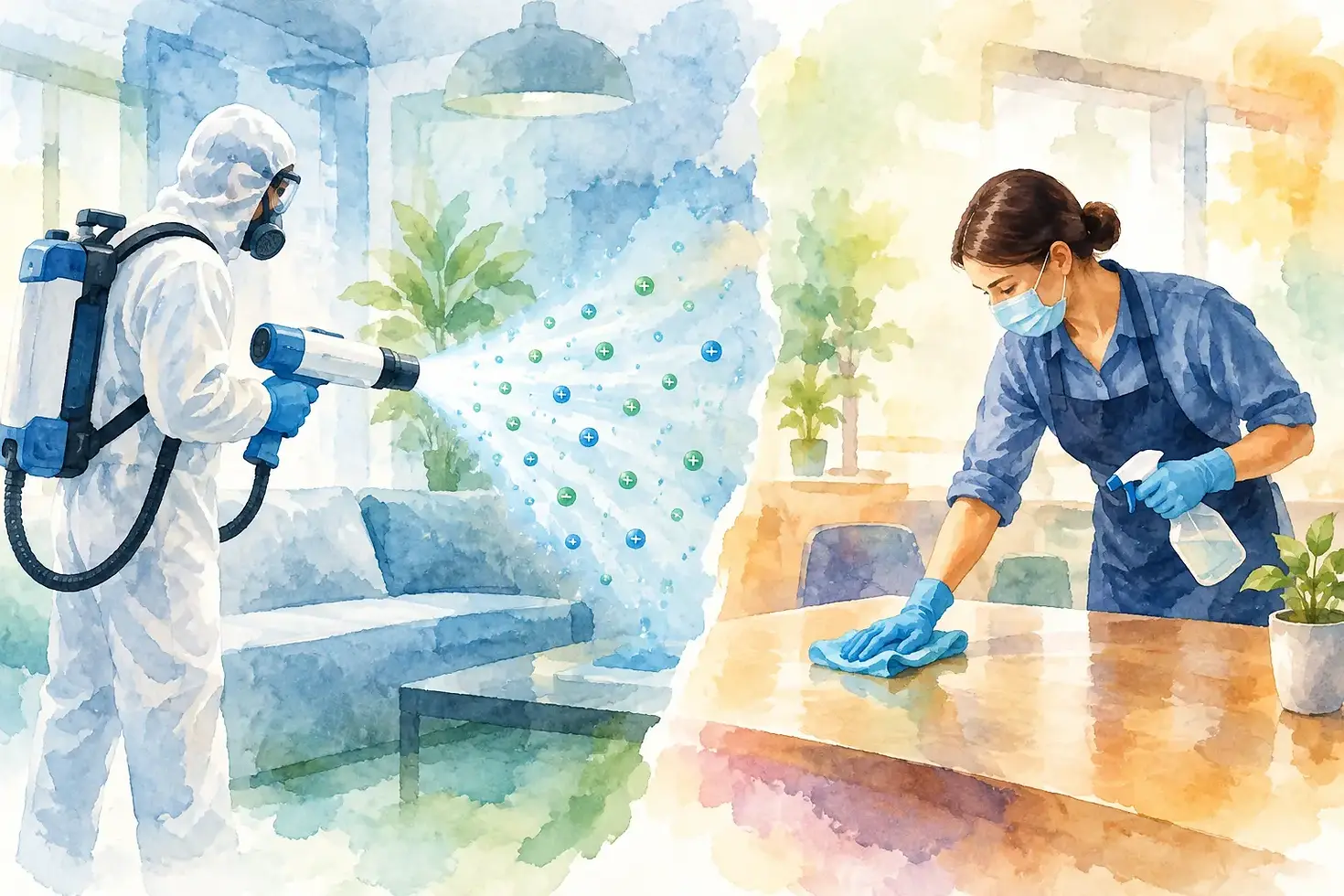
Manual disinfection is the hands-on process most people picture: a trained cleaner applies an EPA-approved disinfectant with a microfiber cloth, wipe, mop, or other targeted tool. The cleaner works through high-touch surfaces such as door handles, light switches, faucet controls, reception counters, elevator buttons, desks, and restroom fixtures.
Its greatest strength is control. A technician can see soil, fingerprints, spills, residue, and areas that need extra attention. That matters because disinfectants do not perform their best on visibly dirty surfaces. If a break room table has food residue or a restroom counter has buildup, it should be cleaned first, then disinfected according to the product label.
Manual work also provides the friction that helps remove dirt and contamination from a surface. It is especially useful for detailed areas, vertical touchpoints, electronics that require careful treatment, and spaces where a liquid mist would be inappropriate.
For many commercial facilities, routine manual disinfection is the foundation of a dependable cleaning program. It is deliberate, verifiable, and well suited to daily or recurring service. A cleaner can focus on the points your employees, patients, customers, or visitors actually contact throughout the day.
The Limits of a Wipe-First Approach
Manual disinfection takes time. In a large facility with many workstations, lockers, fitness machines, shelving areas, or waiting-room chairs, reaching every surface by hand can be labor-intensive. Coverage can also vary when staff are rushed, when a facility layout is complex, or when surfaces are difficult to access.
That does not make manual disinfection ineffective. It means the scope must match the facility. A detailed touchpoint program may be more valuable than trying to hand-wipe every square inch of a large warehouse after every shift.
How Electrostatic Spraying Works
Electrostatic spraying applies a charged disinfectant mist to a surface. The droplets are attracted to grounded surfaces, which can help the product wrap around objects and reach sides, edges, and shapes that are harder to cover with a conventional sprayer.
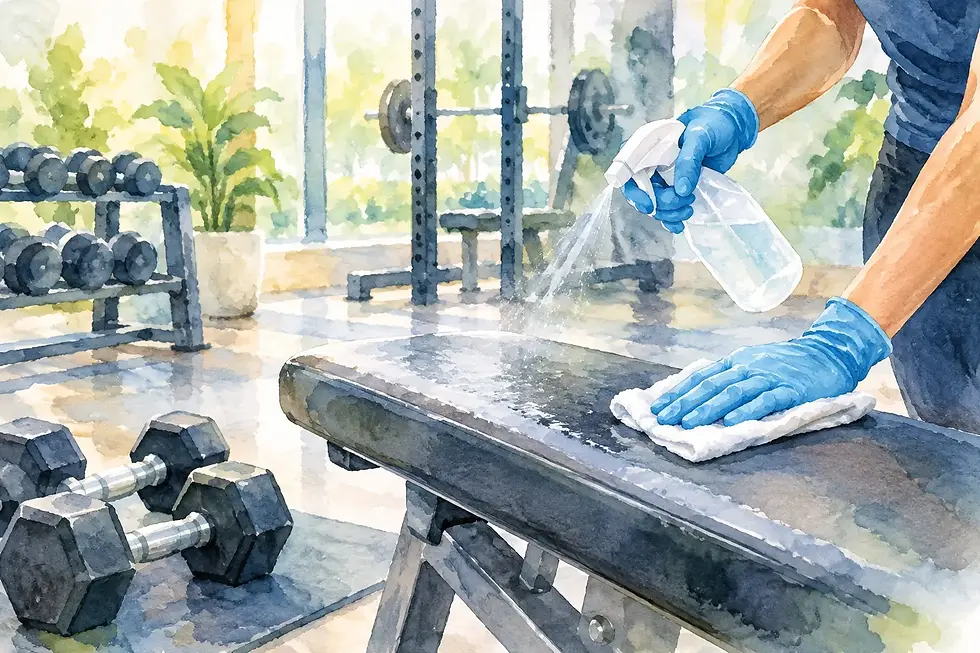
This can be useful in environments with many similar surfaces or complex equipment. Think rows of office chairs, gym equipment, classroom furniture, locker rooms, vehicle interiors, or large common areas with frequent traffic. When used correctly, electrostatic equipment can make broad application more efficient.
However, the equipment itself does not make a disinfectant work better than its label allows. The disinfectant still needs to be appropriate for the intended surface and pathogen claim, mixed or used as directed, and left wet for the required contact time. If a product needs a surface to remain wet for several minutes, a quick pass with a sprayer is not enough.
A trained commercial cleaning team also needs to protect sensitive equipment, avoid spraying where the product should not be applied, and follow site-specific safety procedures. In a medical or dental setting, for example, disinfection practices must work alongside the facility's own infection-control protocols and privacy requirements.
When Electrostatic Spraying Can Be a Smart Choice
Electrostatic spraying is often a practical option after a confirmed illness concern, before or after a high-traffic event, during seasonal illness spikes, or as part of a scheduled deep-disinfection service. It can also help facilities reset shared areas after a busy period.
Its value is most apparent when coverage speed matters and the space contains many hard-to-reach surfaces. A gym with equipment arranged closely together, an entertainment venue with a large seating area, or an automotive facility with multiple vehicle interiors may benefit from targeted electrostatic application.
Still, spraying should not become a substitute for cleaning. Dust, grease, food debris, and other soil need to be removed. High-touch points may still need a manual wipe to ensure complete cleaning and appropriate dwell time.
Electrostatic Spraying Versus Manual Disinfection: The Practical Difference
The difference comes down to purpose. Manual disinfection is best for precision, visible soil removal, and regular high-touch cleaning. Electrostatic spraying is best for efficient, broad coverage across suitable surfaces, particularly after detailed cleaning has already addressed soil and touchpoints.
A dependable program does not treat either method as a shortcut. It starts by identifying how people use the space. A small professional office may need careful daily attention on restrooms, kitchens, conference rooms, entry doors, and shared desks. A warehouse may need focused cleaning in break rooms, restrooms, time-clock areas, forklift touchpoints, and shipping offices, with periodic broader disinfection in common areas.
For a dental practice, the priorities can be even more specific. Public areas, staff rooms, administrative workspaces, and restrooms may be included in a commercial cleaning scope, while clinical areas must align with the practice's established protocols. The right service provider asks questions rather than assuming one process fits every room.
The Details That Matter More Than the Delivery Method
Whether a disinfectant is applied by hand or by electrostatic sprayer, the quality of the result depends on the process behind it. Four factors deserve close attention:
Cleaning before disinfecting: Soil and residue can reduce performance. Surfaces should be cleaned when needed before a disinfectant is applied.
EPA-approved products: Commercial facilities should use products with appropriate EPA registration and follow the label for approved uses and surfaces.
Contact time: The surface must remain wet for the amount of time listed on the product label. This is one of the most commonly missed steps in rushed disinfection.
Trained staff and site controls: Technicians need to understand product handling, ventilation needs, sensitive surfaces, occupied areas, and the facility's access and security requirements.
These are not minor details. They are what separate a visible spray treatment from a professional disinfection process.
Choosing the Right Approach for Your Facility
Start with the risk points in your building. Consider who comes through the doors, what surfaces they share, how often those areas are used, and whether your facility has special compliance or operational needs. A public-facing reception area has different needs from a back-office accounting suite. A restaurant dining room has different priorities from a fitness center locker room.
For ongoing service, manual cleaning and disinfection usually provide the strongest day-to-day value. It allows a cleaning team to remove trash, clean restrooms, maintain floors, address spills, and disinfect the surfaces people touch repeatedly. This consistent attention supports a workplace that feels cared for, not just treated occasionally.
Electrostatic spraying can be added when it makes operational sense. It may be appropriate for periodic deep service, a high-volume event space, an illness-related response, or a larger shared environment where comprehensive coverage would otherwise take significantly longer.
Cost should be considered in the same practical way. A spray treatment may cover a large area quickly, but it may not eliminate the need for hands-on work. Paying for a method that does not address your actual soil, traffic patterns, or touchpoints is not an efficient use of your cleaning budget.
A Better Standard Is a Customized Plan
At Marigold Commercial Cleaning, the goal is not to sell a one-size-fits-all disinfection method. It is to help Northern California businesses maintain cleaner, healthier, and more professional spaces with a plan that fits their facility and schedule.
A walkthrough can identify the areas that need daily detail, the rooms that benefit from periodic deep service, and the situations where electrostatic spraying may add real value. From there, your program can be built around trained staff, professional-grade equipment, EPA-approved products, and service times that do not interrupt your workday.
Your employees and visitors may never ask whether a surface was wiped or electrostatically sprayed. They will notice when the workplace feels clean, cared for, and ready for business. That confidence starts with a cleaning plan designed for the way your facility actually operates.


Comments