


Why Choose Hospital Grade Disinfectants?

A clean-looking workplace can still have a hygiene problem. Door handles, breakroom counters, restroom fixtures, shared keyboards, gym equipment, and exam room surfaces all collect frequent hand contact throughout the day. If you are asking why choose hospital grade disinfectants, the practical answer is that they give your cleaning program a higher, more reliable standard for reducing germs on hard surfaces when they are used correctly.
For Sacramento-area businesses, this is not about making dramatic claims or treating every facility like an operating room. It is about choosing products and procedures that fit the people, traffic, and risks in your building. A well-managed office may need routine disinfection of high-touch areas, while a dental practice, gym, restaurant, or medical space may require more frequent and more carefully documented protocols.
Why Choose Hospital Grade Disinfectants for a Workplace?
Hospital-grade disinfectant is commonly used to describe an EPA-registered product tested for effectiveness against specific disease-causing organisms on hard, nonporous surfaces. The label matters. It identifies what the product is designed to kill, where it can be used, how long the surface must remain wet, and other directions that determine whether the disinfectant can do its job.
That last point is often missed. Spraying a surface and wiping it dry immediately may make it look clean, but it may not provide the stated disinfecting result. Professional cleaning teams follow label directions, including required contact time, rather than relying on a quick spray-and-wipe routine.
Choosing a hospital-grade product can provide several business advantages:
It supports a more consistent approach to high-touch surface disinfection.
It offers EPA-registered claims that can be matched to your facility's needs.
It helps create a cleaner, more reassuring environment for employees, customers, patients, and visitors.
It gives compliance-sensitive facilities a stronger foundation for their cleaning protocols.
The product alone is not the whole solution. Proper application, trained staff, appropriate personal protective equipment, and a cleaning schedule that matches your operation are what turn a good disinfectant into dependable results.
Cleaning and Disinfecting Are Different Jobs
A disinfectant works best on a surface that has already been cleaned. Dirt, grease, food residue, and other buildup can interfere with the product's ability to reach germs on the surface. That is why professional commercial cleaning begins with removing visible soil before disinfecting targeted areas.
Consider a restaurant table after a busy lunch rush. It may need food debris and grease removed first, followed by the correct disinfectant used for the required contact time. In an office, a conference room table may need the same two-part process after back-to-back meetings. The steps are simple, but skipping one can reduce the value of the next.
This distinction also helps facilities avoid overusing disinfectants where ordinary cleaning is enough. Floors, walls, and low-touch areas still need regular attention for appearance and maintenance, but they may not need intensive disinfection every hour. A customized plan focuses effort where it has the greatest health and operational benefit.
Where Hospital-Grade Disinfection Makes the Most Sense
Every commercial property has high-touch points, but the frequency and type of exposure vary. A quiet professional office has different needs than a busy urgent care center or fitness facility. The right level of disinfection depends on foot traffic, shared equipment, vulnerable visitors, food handling, restroom use, and the expectations of your industry.
Medical and dental facilities
Medical and dental practices have obvious reasons to maintain high hygiene standards. Patients may be ill, staff work near clinical areas, and visitors expect careful attention to cleanliness from the moment they enter. EPA-approved disinfectants, used according to label instructions and facility protocols, help support a professional environment without disrupting patient care.
These spaces also call for cleaning staff who understand privacy, security, and the difference between public waiting areas, administrative offices, restrooms, and treatment-related spaces. A one-size-fits-all checklist is rarely enough.
Offices and shared workplaces
In offices, the most important surfaces are often the ones everyone touches without thinking: entry doors, elevator buttons, light switches, copier controls, refrigerator handles, sink fixtures, conference tables, and shared workstations. Regular disinfection of these touchpoints can help reduce the transfer of germs between people during the workday.
It can also influence how employees feel about returning to the office. When restrooms are maintained, breakrooms are fresh, and common areas receive visible care, people notice. A clean space is a happy space, but it is also a more comfortable place to work and welcome clients.
Gyms, entertainment venues, and youth-serving facilities
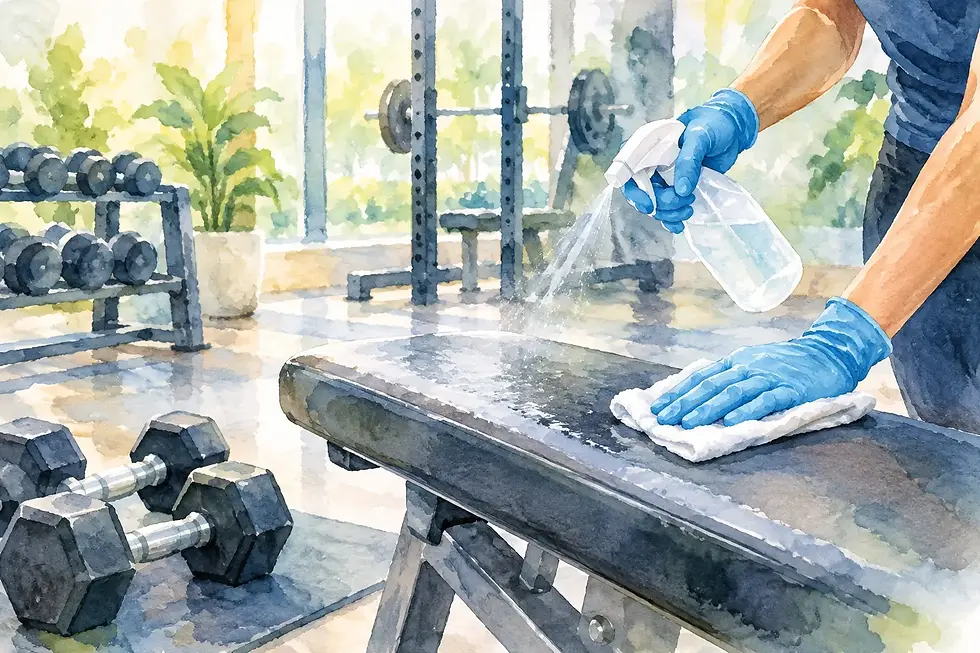
High-contact environments need an organized routine. Fitness equipment, lockers, counters, seating, gaming areas, and shared recreational surfaces can see constant use. Here, the question is not whether to disinfect, but how to do it consistently without closing down the space or creating slippery, overly wet surfaces.
The best plan may include scheduled cleaning rounds, attention between high-traffic periods, and a clear process for responding to spills or illness-related incidents. Product selection should account for the material being cleaned as well. Some disinfectants may not be appropriate for every surface, especially certain plastics, upholstery, electronics, or specialty finishes.
Hospital Grade Does Not Mean Harsh on Every Surface
Stronger is not always better. Some facilities assume that a powerful chemical smell proves a surface is clean, but fragrance is not a measure of disinfection. The right product is the one that has the appropriate EPA registration and surface-use directions for the task, while being used safely around staff, guests, and building materials.
For example, an automotive facility may need products that can handle heavy soil in public areas while protecting customer-facing finishes. A restaurant must consider food-contact surfaces and the procedures required after cleaning. A school or youth program may prioritize products and scheduling practices that minimize disruption around children. The details matter.
There are also operational trade-offs. Hospital-grade disinfectants can require longer contact times than everyday cleaners. Some may require rinsing on particular surfaces, ventilation, or careful storage. A professional janitorial provider accounts for those requirements in the work plan instead of treating disinfection as an afterthought.
What Proper Commercial Disinfection Looks Like
Reliable disinfection is less about a single bottle and more about a repeatable system. Staff need to know which surfaces require attention, how often to service them, how to prevent cross-contamination, and what to do when a facility has an elevated concern.
A strong program typically includes trained, background-checked cleaners; commercial-grade equipment; clearly defined tasks; and quality checks that match the property. Restrooms should not be serviced with the same tools used in breakrooms. Cleaning cloths and mop systems should be managed carefully. High-touch zones should be identified before the shift begins, not guessed at after the fact.
Communication matters just as much. A facilities manager should be able to explain changing priorities, adjust service around events or staffing needs, and receive a prompt response. If an employee reports an illness, a client meeting is scheduled, or a busy season increases traffic, the cleaning schedule may need to change. Flexible service is part of maintaining a healthy workplace.
Choose a Partner That Understands the Details
When evaluating a commercial cleaning company, ask more than whether it uses hospital-grade disinfectants. Ask how staff are trained to use them, whether the products are EPA-approved for their intended purpose, how high-touch areas are identified, and how quality is checked. You should also confirm that the company is insured and bonded and that its team respects access controls, confidentiality, and the daily rhythm of your business.
Marigold Commercial Cleaning builds customized cleaning plans around those practical details, from recurring office service to specialized cleaning for medical, dental, warehouse, fitness, restaurant, and public-facing facilities. A walkthrough is the best place to identify the surfaces, traffic patterns, and scheduling needs that make your space different.
The right disinfectant should never be treated as a shortcut. It is one part of a thoughtful cleaning program that gives your team and visitors more confidence each time they walk through the door.


Comments